
Youth Boating Guide for Alabama, Georgia, and Mississippi Families
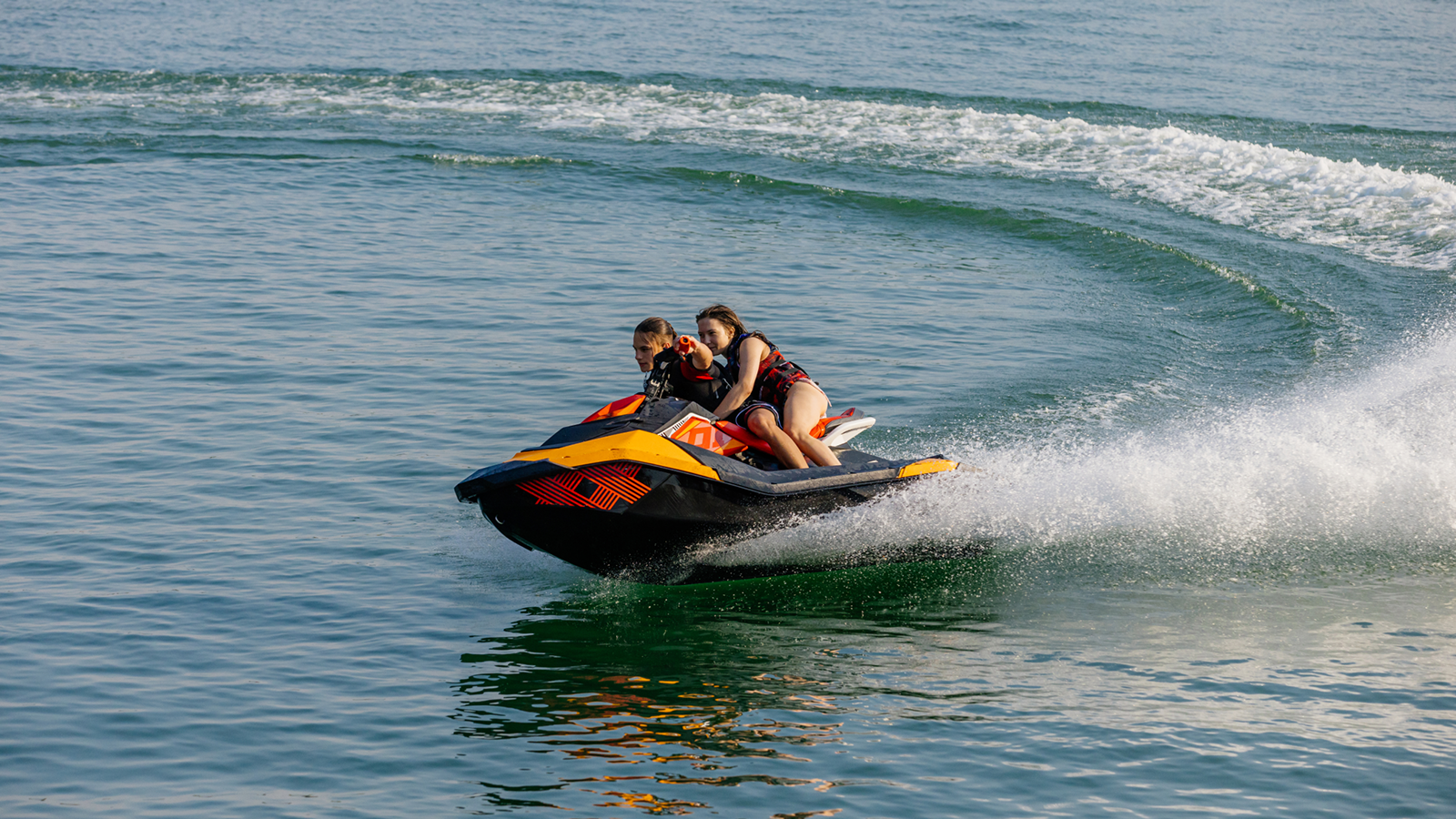
For families in the Southeast, life on the water is a cherished tradition. Whether you’re cruising Lake Lanier, spending a weekend on Lake Martin, making waves along the Gulf Coast, or way down yonder on the Chattahoochee, the water is where memories are made.
At some point, almost every boating family reaches the same milestone:
“Can I drive?”
It’s an exciting moment, but with waterways more crowded than ever, operating a vessel requires a specific set of skills that must be learned. Before you hand over the keys, it is important to understand the youth boating laws and age requirements in Alabama, Georgia, and Mississippi, along with the recommended precautions for keeping young boaters safe.
Why formal boater education matters
Some parents say, “They’ve grown up on the water. They know what they’re doing.” But just as you wouldn't send a new driver onto the interstate without a license and proper instruction, you shouldn't send a young operator onto the water unprepared.
Handing over the keys to a boat or personal watercraft (PWC) is a major milestone that comes with serious responsibility. Boating can be dangerous, especially on crowded waterways where quick decisions and experience matter. Collisions, excessive speed, limited visibility, and inexperience are common factors in serious accidents.
Youth boating laws in Alabama, Georgia, and Mississippi include detailed age requirements, boater education mandates, supervision rules, and other operating restrictions and regulations. Before your teen takes the helm, make sure everyone understands both the legal requirements and the responsibility that comes with operating a boat or PWC.
Boater education requirements
In most states, boaters are required to complete a boater education course approved by the National Association of State Boating Law Administrators (NASBLA) before operating a motorized vessel. These courses are designed to teach the fundamentals of safe and responsible boating.
NASBLA-approved courses typically cover:
Boating laws and regulations
State and federal boating laws, operator age requirements, required safety equipment, vessel registration rules, and boating under the influence (BUI) regulations
Navigation rules
Right-of-way guidelines, buoys and channel markers, navigation lights, and safe operation in various traffic and water conditions
Safety equipment and emergency preparedness
Proper use of life jackets, fire extinguishers, distress signals, engine cutoff switches, and step-by-step emergency procedures
Safe boat operation
Basic boat handling skills, weather awareness, fueling safety, speed management, and accident prevention strategies
Environmental and ethical responsibility
Clean boating practices, pollution prevention, invasive species awareness, and responsible behavior on the water
Age, supervision, and licensing laws by state
ALABAMA
Under age 12
-
A child under 12 may not operate a motorized vessel or personal watercraft (PWC) under any circumstances.
Ages 12-13
May operate a vessel only if:
-
They pass the required Alabama boating exam and obtain a vessel operator’s license.
-
After obtaining a vessel operator’s license, a licensed adult age 21 or older must be on board and seated in a position to take immediate control of the vessel if necessary.
Ages 14 and older
-
May operate a motorized vessel or PWC independently after passing the required Alabama boating exam and obtaining a vessel operator’s license.
The certification process
Alabama has some of the strictest boating laws in the region. The Alabama Law Enforcement Agency (ALEA) Marine Patrol Division issues boat operator’s licenses. A boating license is not a course certificate. It is issued as either a Class “V” endorsement on an Alabama driver’s license or as a separate “Vessel Only” license for individuals who do not yet drive.
To obtain the license, an applicant must pass a written or computerized exam. The exam may be taken at a Department of Public Safety licensing office or through a state-approved online course that allows the student to study and test at home. After successfully completing the exam, the certificate must be presented to the licensing agency so the endorsement or Vessel Only license can be formally issued.
Tip: If your child is preparing to obtain their learner’s permit or driver’s license, they can often take the boating exam during the same visit.
To ensure you have the most up-to-date information on boating laws and operator requirements, visit the Alabama Deparment of Public Safety online.
GEORGIA
Georgia classifies restrictions based on age and the type of vessel:
Under age 12
-
A child under 12 may not operate a motorized vessel over 16 feet in length or a personal watercraft (PWC) under any circumstances.
-
May operate a boat less than 16 feet in length with a motor of 30 horsepower or less only if accompanied by a competent adult.
Ages 12-15
May operate a vessel less than 16 feet in length, including a PWC, only if:
-
They have passed a boating education course approved by the Georgia Department of Natural Resources, OR they are accompanied by a competent adult, aged 18 or older, who is carrying proper identification.
-
May not operate any vessel over 16 feet in length.
Ages 16 and older
-
May operate a vessel or PWC but must carry a photo ID and proof of completion of an approved boating education course while operating any vessel.
The certification process
In Georgia, boating certification is not added to a driver’s license. Instead, operators receive a boater education card, which must be carried as proof of certification while operating a vessel.
To obtain a certification, individuals must pass a boating safety course approved by the Georgia Department of Natural Resources (GADNR). The most convenient option for many teenagers is completing an approved online course, though classroom courses are available, sometimes taught by organizations such as the U.S. Coast Guard Auxiliary or the U.S. Power Squadrons.
After successfully completing an approved course, students receive their boater education card, which serves as proof that they have met Georgia’s boating education requirement. The card is valid for life and may be recognized in other states that require boater education.
To ensure you have the most up-to-date information on boating laws and operator requirements, visit Georgia’s Department of Natural Resources online.
MISSISSIPPI
Under age 12
-
A child under 12 must be accompanied by a parent, guardian, or designated adult (21 or older) to operate a motorboat or PWC.
Ages 12 and older
-
May operate a boat or PWC without supervision if they have passed an approved boating safety course and carry their certificate on board.
The certification process
The Mississippi Department of Wildlife, Fisheries, and Parks (MDWFP) oversees the state’s boater education program. Like Alabama and Georgia, Mississippi accepts online certification through approved providers, and classroom courses are available at some state parks and community centers.
After successfully completing an approved course, students will receive a boater education card as proof that they have met the state’s boating education requirement. Mississippi law also requires operators to carry this card while operating a vessel, as it must be available for inspection by law enforcement if requested.
To ensure you have the most up-to-date information on boating laws and operator requirements, visit The Mississippi Department of Wildlife, Fishereries, and Parks online.
Towing tubes, skiers, and wakeboarders
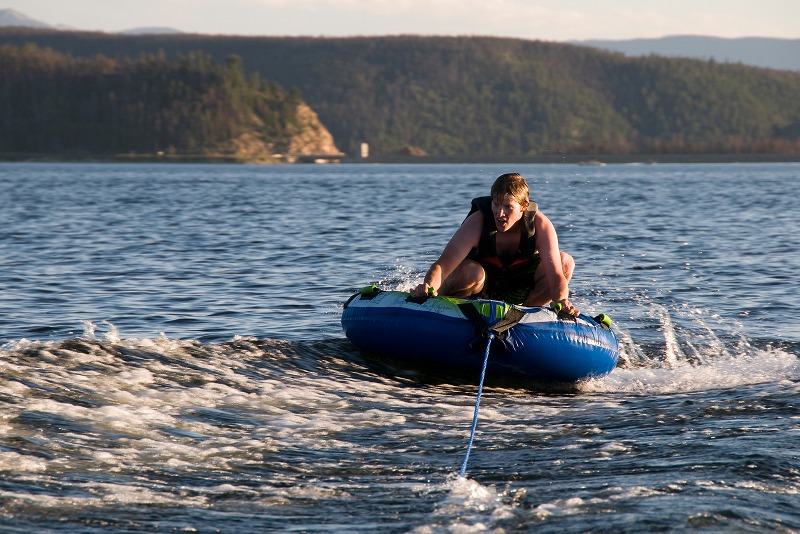
Pulling an inner tube, wakeboarder, or water skier is generally allowed, but it comes with additional safety requirements. Towing can be dangerous, so it is best learned under the supervision of someone with experience.
In Alabama, Georgia, and Mississippi, towing activities are typically allowed if:
- The operator meets the age and certification requirements to operate the vessel.
- A designated spotter is on board in addition to the driver to watch the person being towed.
- The vessel stays a safe distance from other boats, docks, swimmers, and shorelines, following local rules.
- The person being towed wears a U.S. Coast Guard–approved life jacket.
- Towing takes place during daylight hours.
Even when it is legal, towing adds extra responsibility. The driver must watch other boats, control speed, and stay aware of the rider behind the boat. It is also important to avoid crowded waterways and establish clear hand signals between the rider, spotter, and driver. Many families choose to let teens gain experience operating a boat in open water before allowing them to tow someone behind a vessel.
Boating safety tips
Legal requirements are the baseline, but safety goes beyond the law. Even after your teen is certified, we recommend these practical steps to ensure their safety:
Have a float plan
Teach your teen the habit of telling a responsible person where they are going and when they plan to return every time they’re on the water. Ideally, a float plan should be written down. In the event of an emergency, this information is vital for search and rescue teams. For more information or float plan templates, visit the United States Coast Guard online.
Life jackets are non-negotiable
Regardless of state age requirements, insist that your teen wear a U.S. Coast Guard–approved life jacket whenever the boat is in motion. Additionally, life jackets are required by law to be worn at all times when operating a PWC such as a Jet Ski or WaveRunner.
Zero tolerance for alcohol
It is illegal for minors to possess or consume alcohol, and it is especially dangerous to consume alcohol and operate a boat or PWC. Boating under the influence carries serious consequences, including heavy fines, possible jail time, and the loss of boating and driving privileges.
Use the engine cut-off switch
Federal law requires operators of most motorized boats under 26 feet that are equipped with an engine cut-off switch to use it while the vessel is moving. The switch typically connects to the operator with a lanyard clipped to a life jacket, wrist, or clothing, though some boats use other systems. Teach your teen to attach the lanyard every time they start the engine. If the operator is thrown from the boat or moves away from the controls, the switch automatically shuts off the engine, helping prevent injuries and runaway vessels.
Practice weather awareness
Conditions on the water can change quickly, especially during summer thunderstorms, which are common across the Southeast. Teach your teen to check the forecast before leaving the dock and to head back to shore at the first sign of lightning, strong winds, or darkening skies. If they are caught on the water when a storm develops, make sure they know how to stay safe while boating in severe weather.
This is not a complete list of safety precautions, but these tips are a good starting point for helping young boaters develop safe habits on the water.
Liability and insurance considerations
As a parent and boat owner, you would likely be liable if your child causes an accident while operating your vessel. If your teenager is operating the boat legally and meets all age and education requirements, your standard boat insurance policy will typically cover them as a permissive operator.
However, if you allow an underage or uncertified child to operate the vessel in violation of state law, you could face serious consequences. Violating state navigation laws may jeopardize your insurance coverage, leave you personally exposed to lawsuits, and may even result in fines or criminal penalties. We strongly encourage you to review your policy and discuss your family’s boating habits with your insurance agent and your state’s boating authority to make sure you understand both your coverage and the applicable laws.
Safe boating begins here
Handing your teen the keys to the boat is an exciting milestone for many families. Teaching them to operate a boat safely requires patience, preparation, and clear expectations. When young boaters practice good habits and gain experience under supervision, they build the confidence needed to enjoy the water responsibly. If you have questions about protecting your boat or making sure your teen operator is properly covered, an Alfa® agent can help you review your policy and confirm you have the insurance coverage your family needs. With preparation and protection in place, your family can focus on what matters most: making lasting memories together on the water.
All coverages are subject to deductibles and policy limits. This is not an insurance policy. It is intended only to provide a general description of Alfa Insurance® and/or its product lines and services. An actual policy contains the specific details of the deductibles, coverages, conditions and exclusions. Your Alfa® agent can explain the policy and benefits and answer any questions you may have before you buy.